Vitamin D3 and vitamin K2 have become increasingly popular in the wellness community. While each vitamin offers important health benefits on its own, many experts believe they work particularly well when combined. Understanding the benefits of D3 and K2 can help individuals make informed decisions about nutrition, supplementation, and overall wellness. These vitamins play important roles in bone health, calcium regulation, immune function, and cardiovascular support.
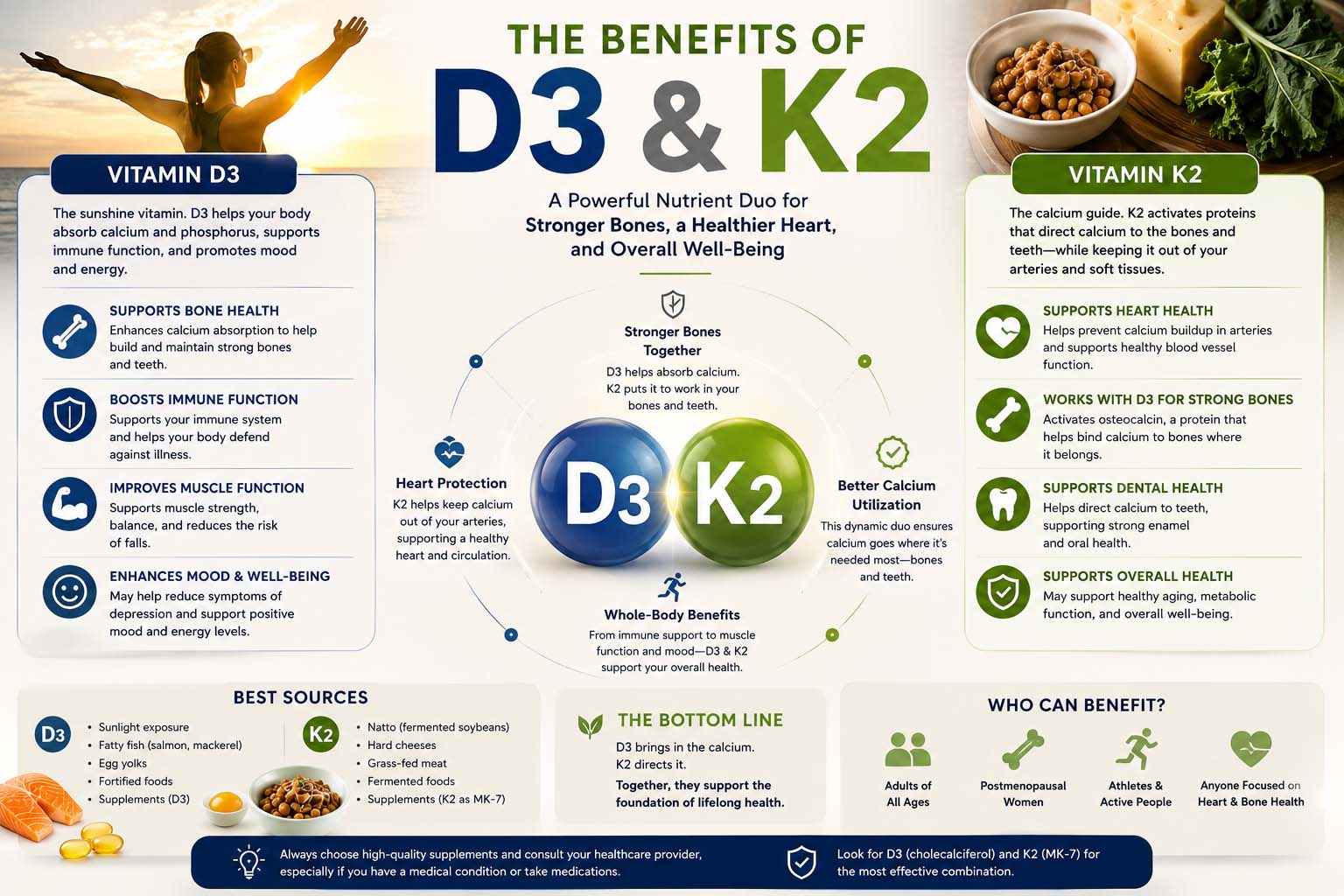
What Are Vitamin D3 and Vitamin K2?
Before exploring the benefits, it’s important to understand each nutrient individually.
- Support calcium absorption
- Maintain healthy bones
- Promote immune function
- Support muscle health
Its primary role is helping direct calcium to areas where it is needed, such as bones and teeth.
Vitamin K2 also contributes to normal blood clotting and cardiovascular health.
Together, these vitamins form a complementary partnership.
Similarly, learning about the benefits of cod liver oil may help you explore another nutrient-rich wellness supplement.
Benefits of D3 and K2: How They Work Together
One reason the combination receives so much attention is because each vitamin performs a different task.
Vitamin K2 helps guide that calcium toward bones and teeth rather than allowing it to accumulate in places where it may not be beneficial.
Because of this relationship, many wellness enthusiasts choose supplements containing both nutrients.
Benefits of D3 and K2 for Bone Health
One of the most widely recognized benefits involves skeletal support.
Improved Calcium Utilization
Vitamin D3 enhances calcium absorption from the digestive system.
Meanwhile, vitamin K2 helps activate proteins involved in directing calcium toward bones.
Bone Strength Support
Healthy calcium management is important for maintaining strong bones throughout life.
Aging and Bone Health
As people age, maintaining adequate nutrient intake becomes increasingly important for supporting normal bone structure and mobility.
Because of these factors, D3 and K2 are often discussed together in bone-health wellness routines.
Additionally, learning about the benefits of a weighted vest may help you explore another topic associated with fitness and bone-focused wellness.
Benefits of Vitamin D3 and K2 for Heart Health
Another commonly discussed topic is cardiovascular wellness.
The potential benefits of vitamin D3 and K2 may extend beyond bones.
Vitamin K2 plays a role in activating proteins that help regulate calcium distribution throughout the body.
Meanwhile, researchers continue studying how calcium management may influence cardiovascular health.
However, maintaining healthy lifestyle habits, including proper nutrition and exercise, remains important for overall heart wellness.
Similarly, information about the best time to take coq10 may help people organizing other wellness supplements.
Benefits of Vitamin K2 and D3 for Immune Support
Vitamin D3 is well known for its connection to immune function.
Healthy vitamin D levels may help support normal immune system activity.
Because vitamin K2 works alongside vitamin D3 in several physiological processes, many people choose to combine them as part of a broader wellness strategy.
Although supplements are not a replacement for a balanced diet, adequate nutrient intake supports overall health.
Benefits of K2 and D3 for Muscle Function
Individuals with low vitamin D levels may sometimes experience:
- Muscle weakness
- Reduced physical performance
- Fatigue
Maintaining healthy levels may support:
- Daily movement
- Physical activity
- Exercise performance
Combined with a healthy lifestyle, D3 and K2 may contribute to overall mobility and wellness.
Benefits of D3 and K2 Vitamins for Long-Term Wellness
The growing popularity of the combination has led many people to ask about the benefits of D3 and K2 vitamins for long-term health.
Potential areas of support include:
Bone Maintenance
Supporting healthy calcium metabolism.
Healthy Aging
Helping maintain overall wellness as nutritional needs evolve over time.
Nutritional Balance
Addressing common nutrient gaps that may occur due to limited sun exposure or dietary habits.
Active Lifestyle Support
Complementing exercise and fitness routines.
Overall, these potential benefits make D3 and K2 a popular pairing in many supplement programs.
Additionally, understanding the best time to workout may help you establish a consistent exercise routine alongside healthy nutrition.
Symptoms of Low Vitamin D Levels
Many people are unaware they may have insufficient vitamin D levels.
Possible symptoms may include:
- Fatigue
- Low energy
- Muscle weakness
- Bone discomfort
- Reduced physical performance
Because symptoms can be nonspecific, healthcare professionals may recommend testing when deficiencies are suspected.
Therefore, early identification can help guide appropriate nutritional strategies.
Causes of Low Vitamin D and K2 Intake
Several factors can contribute to lower intake or reduced levels.
Limited Sun Exposure
Vitamin D production decreases when sunlight exposure is insufficient.
Dietary Habits
Some diets may contain limited amounts of vitamin D or K2-rich foods.
Aging
The body’s ability to produce vitamin D naturally may decline with age.
Lifestyle Factors
Indoor lifestyles can reduce opportunities for sunlight exposure.
Understanding these causes helps individuals make informed health decisions.
Food Sources of Vitamin D3 and K2
Obtaining nutrients through food remains an important part of a healthy lifestyle.
Sources of Vitamin D3
Common sources include:
- Fatty fish
- Egg yolks
- Fortified dairy products
- Fortified cereals
Sources of Vitamin K2
Examples include:
- Natto
- Certain cheeses
- Egg yolks
- Fermented foods
Overall, a balanced diet can help support healthy nutrient intake.
Likewise, understanding the best time to eat sauerkraut for gut health may help you consider how one fermented food fits into a balanced diet.
Wellness Tips for Maximizing D3 and K2 Benefits
Several lifestyle habits may help support overall health.
Spend Time Outdoors
Safe sunlight exposure can support natural vitamin D production.
Stay Physically Active
Regular exercise promotes bone and muscle health.
Eat Nutrient-Dense Foods
Focus on balanced meals rich in vitamins and minerals.
Follow Professional Guidance
Discuss supplementation needs with a qualified healthcare provider.
Maintain Consistency
Healthy habits practiced regularly often produce the best long-term results.
Who May Benefit From D3 and K2?
Certain groups often pay closer attention to these nutrients.
These may include:
- Older adults
- Individuals with limited sun exposure
- People following restrictive diets
- Fitness enthusiasts
- Individuals focused on bone health
However, nutritional needs vary, so personalized advice is always recommended.
FAQ About the Benefits of D3 and K2
What Advantages May These Vitamins Provide?
Potential benefits include support for bone health, calcium metabolism, immune function, and overall wellness.
Vitamin D3 helps absorb calcium, while vitamin K2 helps direct calcium to bones and teeth.
Can I Get D3 and K2 From Food?
Yes. Both nutrients can be obtained through certain foods, although some people may also use supplements.
What Are Symptoms of Low Vitamin D?
Common symptoms may include fatigue, muscle weakness, and reduced energy levels.
Are D3 and K2 Important for Active People?
They may support bone and muscle health, making them popular among physically active individuals.
Should Everyone Take D3 and K2 Supplements?
Supplement needs vary by individual.
Conclusion
The benefits of D3 and K2 continue to attract attention because these nutrients work together to support important aspects of health. From discussions about the benefits of vitamin D3 and K2 and the benefits of vitamin K2 and D3 to understanding the broader benefits of K2 and D3 and benefits of D3 and K2 vitamins, their complementary relationship makes them a popular wellness combination. While maintaining a healthy diet, regular exercise, and adequate sunlight exposure remains essential, ensuring sufficient intake of these nutrients may help support bone health, calcium regulation, muscle function, and overall well-being for years to come.